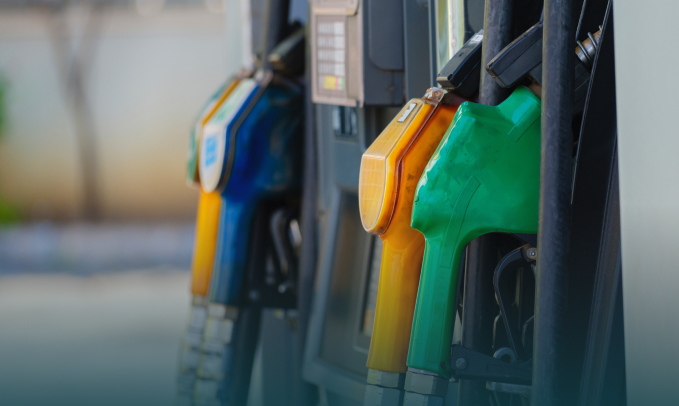
Petroleum products and lubricants represent a distinct category of substances that play a critical role in industry, transportation, and daily operations. For this reason, fuels, oils, solvents, greases, waxes, and bitumen-based materials often become the subject of forensic examinations. Their composition, quality, and trace presence on objects can provide essential information for technical investigations, incident analysis, and judicial proceedings.
Objects Examined in This Type of Analysis
individual volumes of fuels, oils, solvents, lubricating greases, paraffins, and bituminous materials;
mixtures of petroleum products with other industrial or technical substances;
objects bearing traces of petroleum products or lubricants — such as clothing, equipment, mechanical components, vehicles, and other material surfaces.
Request a service
20+ YEARS OF EXPERIENCE
Our team includes experts with over 20 years of experience in law enforcement and forensic science.
The QUANT laboratory is equipped with one of the most advanced suites of analytical instruments in Russia.
Objectives of Fuel and Lubricant Examination
The forensic examination of fuels and lubricants is in demand in both criminal and administrative cases—such as investigations of fires, traffic accidents, and violations of machinery operating conditions—as well as in commercial disputes where the quality of fuels or lubricating materials must be assessed. The results of such analyses carry significant evidentiary value and make it possible to establish the objective circumstances of an incident.
determining the type, grade, and classification of the petroleum products and lubricants submitted for examination in accordance with established scientific, technical, and commercial standards;
establishing whether the compared samples belong to the same type, grade, or class of petroleum products or lubricants;
determining the general group affiliation of the examined materials (fuels, petroleum derivatives, lubricants);
detecting traces of petroleum products and lubricants on various substrates and material carriers;
assessing the operational condition of mechanical systems with friction pairs based on the analysis of lubricant degradation and performance indicators;
determining the nature and causes of changes or degradation in petroleum products and lubricants;
identifying the nature of an unknown substance in order to determine whether it belongs to petroleum-derived products or lubricating materials.
Reliability and Accuracy of Results
All examinations are conducted by specialists with relevant academic training and substantial experience in forensic practice.
Expert reports are prepared in full compliance with procedural legal requirements and carry full evidentiary weight as court-admissible documentation.
How the Examination Is Conducted
The analysis of petroleum products and lubricants relies on modern methodologies of forensic and analytical chemistry that ensure a high level of accuracy and reliability:
chromatographic analysis – for determining composition and identifying contaminants or adulterants;
spectroscopic techniques (IR, UV–Vis, mass spectrometry) – for establishing molecular structure and component profiles;
physicochemical testing – for evaluating the operational and performance characteristics of fuels and lubricants;
comparative analysis – matching samples with reference materials to determine conformity or origin.
The integrated use of these analytical approaches makes it possible to detect even minor compositional changes, determine the origin of a substance, and substantiate expert conclusions with high confidence.
Where This Examination Is Used
The forensic examination of petroleum products and lubricants has practical significance across a wide range of applications:
in criminal investigations – in cases involving fires, arson, traffic accidents, and fuel theft;
in commercial and civil disputes – when assessing deliveries of substandard fuels or lubricating materials;
in technical and industrial contexts – when determining the causes of equipment or machinery failure.
The results of such examinations allow investigators and courts to:
confirm or refute competing versions of events;
identify non-compliance with product standards;
provide objective, legally admissible data to judicial authorities.
Forensic fuel and lubricant examination is not only a scientific analysis of composition and properties – it is a reliable evidentiary tool that can play a decisive role in legal proceedings and commercial disputes.
Yes. Modern analytical methods allow reliable examination even with minimal sample volumes or trace amounts present on physical evidence.
On average, 10 to 20 business days, depending on the scope and complexity of the analysis.
Yes. Comparative analytical studies make it possible to correlate fuel or lubricant samples with a specific batch or product type.
Yes. Comparative analysis allows experts to establish whether polymer particles correspond to a specific item or production batch.
Yes. Expert opinions issued by LLC “MHTC QUANT” comply with procedural legislation and carry full legal force as admissible evidence.
Yes. The examination determines composition and impurities, allowing the identification of inconsistencies with declared specifications.
ABOUT THE COMPANY
QUANT Multidisciplinary Chemical Technology Center
is a specialist bureau providing forensic examination and analytical chemistry services. For over 20 years we have been conducting expert investigations and delivering reports that help our clients protect their interests in court and in out-of-court proceedings.